Saturday, 14 June 2014

22 JUMP STREET

Why are you perusing this survey?

It's a genuine inquiry, not only in light of the fact that "22 Jump Street" is a continuation of a hit, and accordingly a case of what's known as a "faultfinder confirmation motion picture," additionally in light of the fact that it surveys itself as it comes. It's an amigo cop motion picture about pal cop films that appears dead set to go Edgar Wright's present day fantastic "Hot Fuzz" one better (no one can do that, yet decent attempt). It's additionally a continuation about continuations, and the regularly pessimistic advance of spin-
offs. Furthermore its, extremely mindful of itself as a film or "motion picture." It suspects any perception or complaint you may make and makes it initially, with a smile and a shrug. It pushes the meta-amusingness thing so far that before long, viewing it begins to feel like a friendly surrender to low desires similar to the Bob Hope and Bing Crosby "Street" pictures, some of which felt so mandatory that after a certain point the studio should have supplanted the movies with printed cards advising fans where to send their cash.

In "21 Jump Street," officers Jenko (Channing Tatum) and Schmidt (Jonah Hill) went undercover at a secondary school. In this film, its school. Environmental points of interest aside, however, the examinations are similar to the point that Jenko, Schmidt and different characters comment on their similitude, and in addition the way that this is a continuation of film a focused around a TV show, and that nothing of result will happen in it. There are jokes about how spin-offs are "constantly more terrible the second time around" yet they've been given "unlimited power with the financial backing, mother- -r," and how the new area house, an open-disclosed enormity, looks "twice as unmanageable" as the one in the last motion picture "for no reason" and takes after "a solid shape of ice" (an expression articulated when costar Ice Cube shows up as the team's authoritative leader, Capt. Dickson). Jenko sighs that he's "the first individual in my family to put on a show to set off for college," then gets in great with a society that may be managing a dangerous amphetamine-like medication known as Wi-Fi. Schmidt acts like Jenko's kindred spirit, a schlump.

Also its here that the script, credited to Michael Bacall, veers far from unadulterated parody and gets to be what Gender Studies majors may call a deconstruction of manly codes, joking the same macho buzzwords it revels. This is not another methodology. The James Bond movies, Sergio Leone westerns, the "Deadly Weapon" arrangement, the under-seen and underrated "Shooters," the "Terrible Boys" motion pictures, Jackie Chan's entire profession, and the previously stated "Hot Fuzz"—which you ought to watch instantly in the event that you haven't officially all did it, as well, to shifting degrees. Still, "22 Jump Street" is a prevalent illustration. It takes the homoerotic vitality rising under the surface of mate movement flicks and raises it into the daylight, where it can flex its pecs and snarl.

The physical contrasts between the tall, husky, sports Jenko and the short, uncooked Schmidt were a wellspring of amusingness in the first film. Here they're underlined by having Jenko turn into a football star to pal up with one key suspect, a quarterback and brotherhood bigwig played by Wyatt Russell. Their relationship is focused around liking one another's alpha male marvelousness. (Jenko has the edge; he can open brew flasks with his eyelids.) Their obsessive workouts remained in for the sex they won't have in light of the fact that they're straight. Then, Schmidt plays femme to Jenko's butch, succumbing to a verse real named Maya (Amber Stevens) and softening around her as a cliché female groupie may liquefy around an adolescent male abstract lion. (Schmidt even gets a "stroll of disgrace" after the first night they use together, gripping his tennis shoes like heels.) After a while Schmidt begins to suspect that Jenko is in excessively profound at the frat—not a code word, amazingly—and they have a pulverizing talk that finishes with Jenko saying that perhaps now is the right time that they examined other individuals.

Is this film against homophobic, or would it say it is managing in what commentator Sam Adams calls "meta-homophobia"? Regardless of a couple of unrefined failures, its more the previous, I think; if anything, this current film's constant clowning about Schmidt and Jenko as sweethearts who decline to transcendent feels like a social development. A motion picture like this couldn't have been made twenty years back, or even ten, unless it were wasting time going on and on of craft house gatherings of people. It may have had different characters joking about how Schmidt and Jenko ought to simply get a room as of now, however it wouldn't have expounded on it at gimmick length, with such force. The accomplices in "22 Jump Street" don't kiss, however the way Hill and Tatum convey state-of-the-relationship lines while battling back tears, they don't need to. There's a closeup of the pouty-lipped Jenko dolled up for an organization surge party, as well tight puka neckband stifling his Frankenstein's-creature neck, that distils a century's value of fratboy sublimation to one picture. Slope and Tatum are a splendid group. They play idiotic the way Jelly Roll Morton played piano. Tatum, specifically, has a blessing for depicting lunkheaded goodness. He's never more amusing than when Jenko is constantly genuine. Regardless of who you are, Jenko is cheerful to see you, and in case you're pleasant to him, he'll love you work the end of time. He's the greatest, brawniest puppy in film history: Marmaduke as played by a human.

This appears to be as great a spot as any to note that "22 Jump Street" is the most recent film by chiefs Phil Lord and Christopher Miller, the auteurs behind a reach of mindful blockbusters, incorporating the "Shady with a Chance of Meatballs" movies, "The Lego Movie" and "21 Jump Street." Lord and Miller are bosses of consuming their cake and having it, as well. In the majority of their work—yet "The Lego Movie" particularly you get the feeling that they've considered (ahem) about the embodiment of the thing they're ridiculing, and what, precisely, the viewer's hunger for that kind of excitement says in regards to them by and by, and in addition the society that encases us. The "Lego Movie" tune "Everything is Awes

Friday the 13

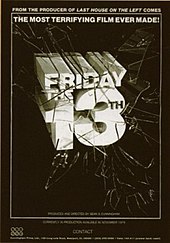
Friday the thirteenth is an American ghastliness establishment that involves twelve slasher movies, a TV program, books, comic books, and tie‑in stock. The establishment essentially concentrates on the narrative character Jason Voorhees, who suffocated as a kid at Camp Crystal Lake because of the carelessness of the camp staff. Decades later, the lake is reputed to be "reviled" and is the setting for an arrangement of mass homicides. Jason is emphasized in the greater part of the movies, as either the executioner or the inspiration for the killings. The first film was composed by Victor Miller and was delivered and controlled via Sean S. Cunningham. On the other hand, none, of these came back to compose or administer any of the continuations. The movies have earned over $465 million in the cinema world around the world.

The principal film was made to take advantage of achievement of Halloween (1978), and its own particular achievement headed Paramount Pictures to buy the full permitting rights to Friday the thirteenth. Honest Mancuso, Jr., who created the movies, likewise created the TV program Friday the thirteenth: The Series after Paramount discharged Jason Lives. The TV arrangement was not associated with the establishment by any character or setting, however was made focused around the thought of "bad fortunes and condemnations", which the film arrangement symbolized. While the establishment was claimed by Paramount, four movies were adjusted into books, with Friday the thirteenth Part III adjusted by two different writers. At the point when the establishment was sold to New Line Cinema, Cunningham returned as a maker to regulate two extra movies, notwithstanding a hybrid film with character Freddy Krueger from the Nightmare on Elm Street film arrangement. Under New Line Cinema, 13 novellas and different comic book arrangement emphasizing Jason were distributed.

In spite of the fact that the movies were not prevalent with commentators, Friday the thirteenth is viewed as a standout amongst the best media establishments in America for the accomplishment of the movies, as well as due to the broad promoting and rehashed references to the arrangement in prominent society. The establishment's prominence has produced a fanbase who have made their Friday the thirteenth movies, designed copy Jason Voorhees outfits, and tattooed their bodies with Friday the thirteenth craftsmanship. Jason's hockey cover has even turned into a standout amongst the most conspicuous pictures in prominent society.

In the first Friday the thirteenth (1980), Mrs. Voorhees (Betsy Palmer) stalks and homicides the young people who are planning Camp Crystal Lake for re‑opening. She is resolved to guarantee that the camp does not revive after her child Jason (Ari Lehman) suffocated in the lake in light of the fact that two staff parts who should be viewing him were having intercourse. The last guide, Alice (Adrienne King), battles off Mrs. Voorhees long enough to snatch a cleaver and behead her.[5] In Friday the thirteenth Part 2 (1981), Jason (Steve Daskewisz/Warrington Gillette) is uncovered to be alive and completely developed. In the wake of executing Alice, Jason comes back to Crystal Lake to watch it from all interlopers. Five years after the fact, a gathering of adolescents land at Crystal Lake to set up another camp, however Jason murders them. Ginny Field (Amy Steel), the last advocate Jason endeavors to murder, discovers a lodge in the forested areas with a sanctuary manufactured around the disjoined head of Mrs. Voorhees. Ginny battles back and pummels a cleaver through Jason's shoulder. Jason is left for dead as Ginny is taken away in a rescue vehicle. Throughout the occasions of Friday the thirteenth Part III (1982), Jason (Richard Brooker) expels the cleaver from his shoulder and discovers his approach to Chris Higgins' (Dana Kimmell) nearby residence. Chris comes back to her property with a few companions, and Jason slaughters any individual who meanders into the animal dwellingplace where he is stowing away. Taking a hockey cover from an exploited person to shroud his face, Jason leaves the animal dwellingplace to execute whatever remains of the gathering. Chris apparently murders Jason with a hatchet to his head, yet the night's occasions drive her into insanity as the police take her away.

Friday the thirteenth: The Final Chapter (1984) proceeds where Part III leaves off, with Jason (Ted White) found by the police and taken to the neighborhood mortuary in the wake of evacuating the hatchet. Upon entry, Jason murders the coroner and a medical caretaker before coming back to Crystal Lake. A gathering of companions lease a house on Crystal Lake and succumb to Jason's frenzy. In the wake of murdering the youngsters, Jason searches out Trish (Kimberly Beck) and Tommy Jarvis (Corey Feldman), who live adjacent. While diverted by Trish, Jason is assaulted and murdered by Tommy. Friday the thirteenth: A New Beginning (1985) takes after Tommy Jarvis (John Shepherd), who was focused on a mental wellbeing foundation after the occasions of The Final Chapter and grew up always sorry to say Jason (Tom Morga) will return. Roy Burns (Dick Wieand) utilization Jason's persona to turn into a copycat executioner at the part of the way home to which Tommy has moved. Tommy, administrator Pam (Melanie Kinnaman), and a young person named Reggie (Shavar Ross) figure out how to annihilation Roy. They in the long run discover that Roy had a child who was killed by one of the patients at the establishment, activating Roy to tackle Jason's similarity and execute everybody there. Friday the thirteenth Part VI: Jason Lives (1986) starts with Tommy (Thom Mathews) going to Jason's grave in the wake of being discharged from an alternate mental foundation. Tommy accidentally revives Jason (C. J. Graham) with a bit of the wall encompassing the cemetery going about as a lightning bar. Jason instantly heads over to Crystal Lake and executes the individuals working at the new summer camp. Tommy inevitably affixes Jason to a rock that he tosses into the lake, where he leaves Jason to pass on.

Friday the thirteenth Part VII: The New Blood (1988) starts an uncertain timeframe after Jason Lives. Jason (Kane Hodder) is restored once more, this time by the telekinetic Tina Shepard (Lar Park Lincoln), who is attempting to restore her father who suffocated in the lake when Tina was a youngster. Jason by and by starts killing the individuals who involve Crystal Lake and is come back to the lowest part of the lake after a fight with Tina.[11] Jason is revived again in Friday the thirteent

LA Kings (Los Angeles Kings)

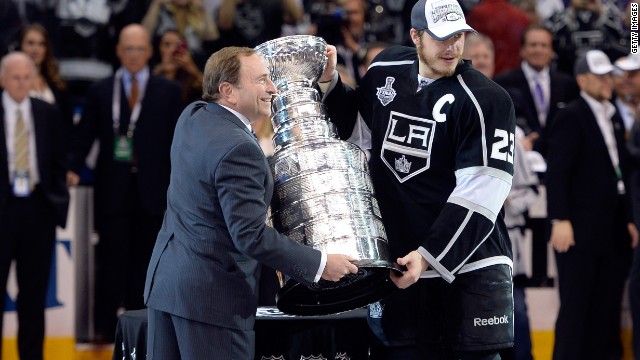
The Los Angeles Kings scored in twofold extra time Friday night, overcoming the New York Rangers 3-2 and winning their second Stanley Cup in three years.

Alec Martinez slapped in the winning objective and the National Hockey League's title trophy went to the Kings after an exciting Game 5 at the Staples Center in do)wntown Los Angeles.

The Kings needed to strive to claim the prize.

What a shot! 42 astounding games photographs What a shot! 42 astonishing games photographs

Los Angeles brought an early lead with an objective by Justin Williams, however the Rangers fought back and tied it with a strategic maneuver objective by Chris Kreider late in the second period. Brian Boyle scored again for the Rangers minutes after the fact, making the score 2-1 New York.

The Kings tied it 2-2 in the third period with a strategic maneuver objective by Marian Gaborik. The swarm droned "We need the glass" as the amusement headed down the stretch of regulation time.

The sketchy Rangers took stand out diversion in the arrangement, a 2-1 triumph Wednesday in New York.

Los Angeles netted its first Stanley Cup in 2012 by vanquishing the New Jersey Devils. That title finished many years of vanity for an establishment battling for achievement in a game commonly connected with freezing temperatures and cold lakes.

Their run over the past few years has given the Kings consideration and footing with a metropolitan fan base commanded by the NBA's Lakers and Clippers, baseball's Dodgers and Angels, and football and b-ball at UCLA and the University of Southern California.

NYC leader to show up on Kimmel to respect wager

A Monday triumph parade is arranged in downtown Los Angeles, as indicated by Mayor Eric Garcetti. "We all feel gigantic pride today," Garcetti said after the win. "Our Kings of the ice were once considered underdogs. However with two Stanley Cup wins in three years, they have demonstrated they are Kings of the diversion."

The main term chairman will additionally get to rejoice in viewing a kindred new kid on the block - New York City Mayor Bill de Blasio - hold up his end of a wager the two city boss made on the arrangement.

De Blasio declared before the arrangement that if the Rangers lost, he would perform Randy Newman's "I adore LA" on "Jimmy Kimmel Live!"

Had the Kings lost, Garcetti would have needed to have performed Frank Sinatra's "New York, New York" on the ABC late-night system, as indicated by a de Blasio press discharge.

The New York chairman is likewise on the snare for supplying Kimmel's studio crowd in Los Angeles with franks from Gray's Papaya, a Big Apple point of interest.